




Living on a barrier island provides a unique lifestyle. At Ocean to River Properties, we appreciate the beauty of Atlantic sunrises and river sunsets. However, hurricane season is an important consideration for all coastal residents.
Power outages are common during tropical weather. For barrier island homes, a reliable power source is essential for safety, comfort, and property protection. If you are upgrading your coastal home, consider investing in a whole-home standby generator.
This guide outlines whole-home generator solutions tailored for barrier island living.
Portable vs. Whole-Home Standby: Why Standby Wins
Portable generators can power basic appliances but require manual setup, gasoline storage, and extension cords, which can be hazardous during severe weather.
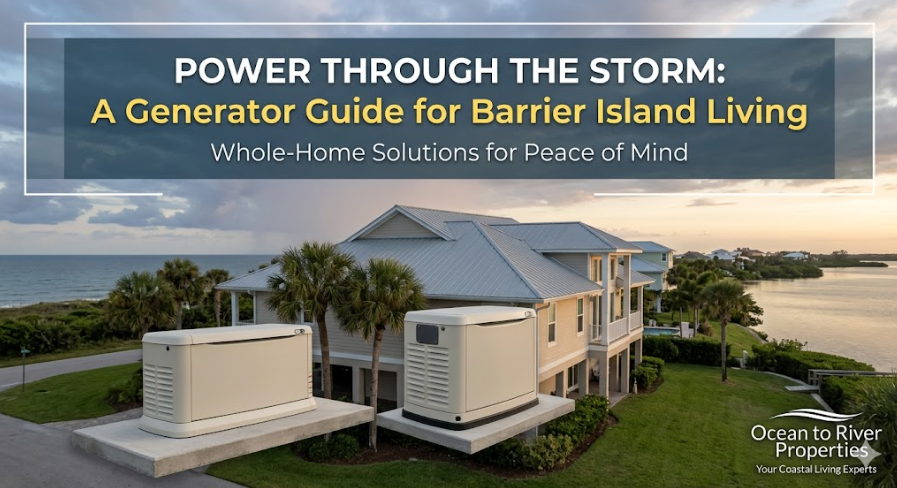
A whole-home standby generator is permanently installed outside your home and connects directly to your electrical panel. Powered by liquid propane or natural gas, it activates automatically within seconds of a power outage, regardless of your location.
This seamless transition is essential for maintaining dehumidifiers, sump pumps, and air conditioning to prevent mold in the humid coastal climate.
The Coastal Difference: Unique Installation Challenges
Generator installation on a barrier island differs from the mainland due to unique coastal challenges that must be addressed:
1. Saltwater Corrosion is the Enemy
Salt-laden ocean air accelerates metal corrosion. Avoid generators with steel enclosures, as even powder-coated steel will rust over time. Choose aluminum or composite enclosures, which resist salt corrosion and extend the unit’s lifespan.
2. Elevation and Flood Zones
Many barrier island properties are in flood hazard areas. Local codes and FEMA regulations require generators to be installed above the Base Flood Elevation (BFE). Installers often build custom, elevated, hurricane-rated platforms to prevent submersion during storm surges.
3. Hurricane-Force Winds
Generators and platforms must be engineered for extreme wind loads, using heavy-duty concrete pads, hurricane tie-downs, and compliance with local wind-load codes.
4. Choosing the Right Fuel Source
Since many barrier islands lack municipal natural gas lines, liquid propane is the most common fuel source. A dedicated propane tank must be installed, either buried or anchored above ground, depending on property conditions and local codes. A 250- to 500-gallon tank typically powers a home for a week or more.
Sizing Your System: What Needs Power?
Generators are measured in kilowatts (kW). To select the appropriate size, calculate the running and starting wattage of your essential systems.
At a minimum, most coastal homeowners want to power:
- HVAC systems (crucial for humidity control)
- Refrigerators and freezers
- Well pumps or water heaters
- Medical equipment (if applicable)
- Basic lighting and communication devices (Wi-Fi routers)
A 14kW to 18kW generator typically supports a mid-sized home’s essentials. A 22kW to 26kW unit can power a large home, including multiple AC units and pool pumps.
Protecting Your Property Value
At Ocean to River Properties, we find that buyers often prioritize homes with pre-installed whole-home generators. These systems offer peace of mind, especially for those new to hurricane-prone areas. Standby generators protect against secondary damages from outages and provide a strong return on investment when selling.
Maintenance is Mandatory
Generators require regular maintenance. On a barrier island, we recommend a maintenance contract with a certified local technician. They will service the unit, check for corrosion, and ensure it operates weekly so it is ready during storms.
Living on a barrier island is a unique experience that requires additional preparation. Investing in a whole-home generator designed for coastal conditions ensures your comfort and protects your property.
If you are looking to buy or sell a resilient coastal home, the Ocean to River Properties team is ready to help you navigate the barrier island real estate market. Contact us today to get started.
Check out this article next