




For oceanfront condominium owners and HOA board members, property maintenance is about more than just appearances. Ongoing attention to structural health is essential, as concrete degradation—particularly spalling and rebar corrosion—poses significant risk to coastal buildings.
To address these potential hazards, it is important to understand the causes of concrete damage and learn how restoration can safeguard your property. Below is an overview of what you need to know.
The Hidden Enemy: Saltwater and Steel
Modern condos use steel-reinforced concrete. Concrete provides compressive strength to support loads, while rebar allows the building to flex under stress.
Concrete’s alkalinity protects steel rebar, but it is porous. At the coast, wind, spray, and salty air drive chlorides into the concrete’s tiny pores.
Once chlorides reach the steel rebar, they compromise its protective layer, causing the steel to rust.
Let’s explore what happens when rebar corrosion occurs:
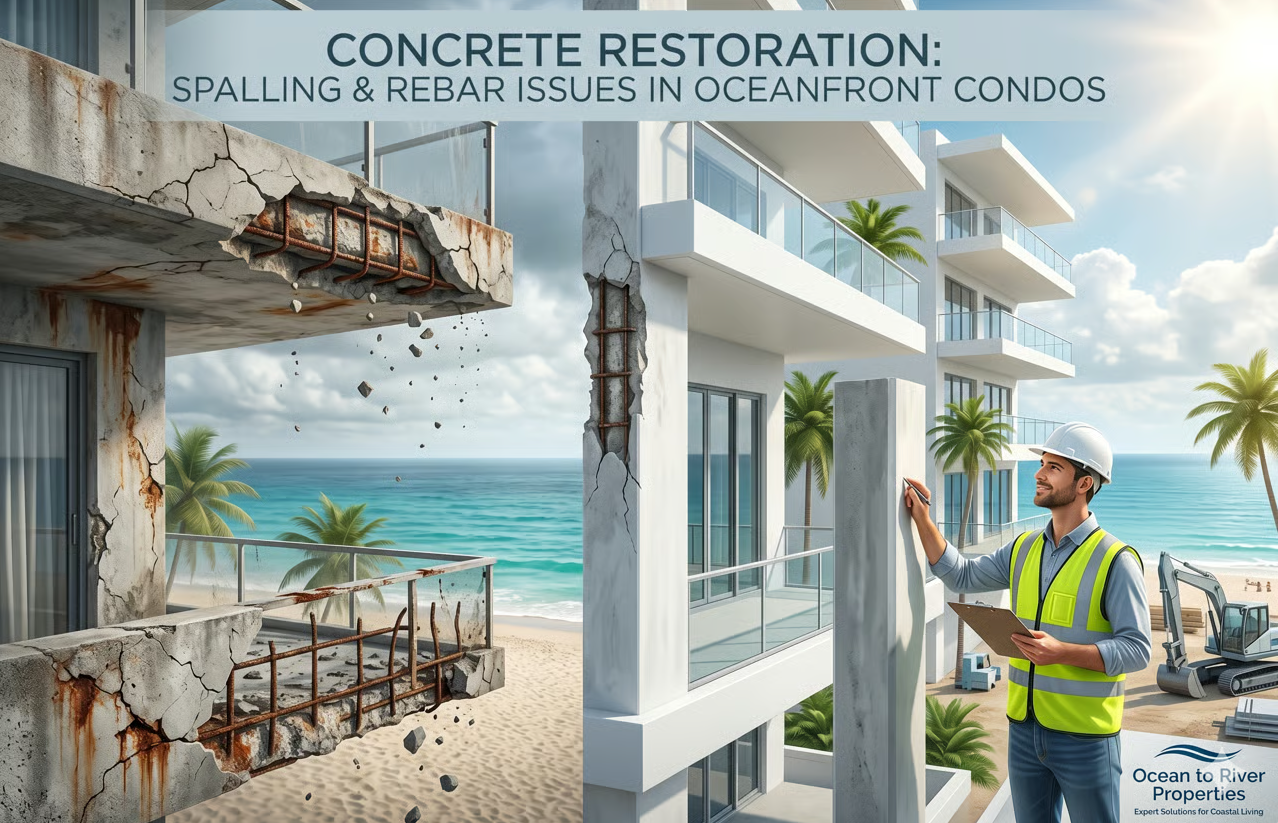
When steel rebar rusts, a chemical reaction causes it to expand up to six times its original volume. This internal expansion generates significant pressure within the concrete slab. The outward pressure begins to crack, bulge, and break away. This flaking and crumbling of concrete is known as spalling (sometimes referred to in the industry as "concrete cancer").
Spalling is more than a cosmetic concern; it represents a significant structural vulnerability. As concrete deteriorates, additional rebar becomes exposed, accelerating corrosion and compromising the integrity of balconies, walkways, columns, and parking garages.
Spotting the Warning Signs
Early detection prevents severe damage and expensive repairs. Owners and managers should regularly check for these warning signs:
- Rust Stains: Reddish-brown streaks running down the sides of the building, especially under balconies or near the edges of concrete slabs.
- Hairline Cracks: Small fissures in the concrete, particularly those that run parallel to the edges of balconies or walkways.
- Bubbling or Peeling Paint: Moisture trapped beneath the surface often causes exterior paint or waterproof coatings to bubble and peel.
- Exposed Rebar: Visible metal grid within the concrete indicates advanced spalling.
- Chunks of Debris: Small pieces of concrete found on the ground or lower-level balconies are an immediate warning sign.
The Concrete Restoration Process
Temporary patches don’t fix the root problem. Correct concrete restoration is specialized and involves these key steps:
- Engineering Assessment: A licensed structural engineer evaluates the building, often using ground-penetrating radar or sounding tests to determine the extent of hidden damage.
- Shoring and Excavation: Temporary supports are installed, and damaged concrete is removed until only solid concrete and clean rebar remain.
- Rebar Treatment: Exposed steel is sandblasted or wire-brushed to remove rust. Severely corroded rebar is replaced as needed, then coated with a rust-inhibiting epoxy.
- Patching and Curing: High-strength, polymer-modified concrete is applied to restore the structure’s original shape and strength.
- Waterproofing: The surface is sealed with a high-quality elastomeric coating to prevent future moisture and salt intrusion.
The Cost of Delaying Repairs
Delaying maintenance is costly. A $5,000 repair can quickly become a $50,000 overhaul if neglected.
Furthermore, recent legislative changes in states such as Florida now require strict structural milestone inspections for aging condos. Buildings lacking structural integrity may face special assessments, loss of insurability, and reduced property values. Most importantly, proactive restoration protects resident safety.
With these challenges in mind, at Ocean to River Properties, we understand the unique needs of coastal real estate. Whether you are buying, selling, or seeking to assess the long-term viability of your investment, our team is ready to assist you.
Protect your property’s value from coastal elements. Stay proactive, stay informed, and enjoy the ocean-to-river lifestyle confidently.
If you have questions about oceanfront property ownership or are considering buying or selling on the coast, contact Ocean to River Properties today.
Check out this article next