





Living on the coast is a dream come true for many. But owning a piece of beachfront paradise also comes with a unique and beautiful responsibility: sharing our shores with marine life.
As we enter sea turtle nesting season—which officially runs from March 1st through October 31st here on the Florida coast—it is time for beachfront homeowners to do their part in protecting these incredible creatures. One of the most critical ways to do this is by understanding and adhering to local beachfront lighting ordinances.
Here is everything you need to know about keeping your property turtle-friendly this season.
Why Does Lighting Matter to Sea Turtles?
To understand the ordinances, it helps to understand the biology. For millions of years, sea turtle hatchlings have relied on the natural light of the moon and stars reflecting off the ocean to guide them from their sandy nests to the water.
When beachfront properties use bright, unshielded artificial white lights, it disrupts this ancient navigational system. Hatchlings can become disoriented, crawling toward the artificial light instead of the ocean. This misdirection often leads to dehydration, exhaustion, predation, or even wandering onto busy coastal roads. Adult female turtles looking for a safe place to lay their eggs can also be deterred from coming ashore by bright lights.
The Three Golden Rules of Turtle-Safe Lighting
Most local coastal governments enforce strict lighting ordinances during nesting season. While the exact codes vary slightly by municipality, they all generally follow the Florida Fish and Wildlife Conservation Commission (FWC) guidelines.
To stay compliant and protect the turtles, follow the three golden rules of turtle-safe lighting:
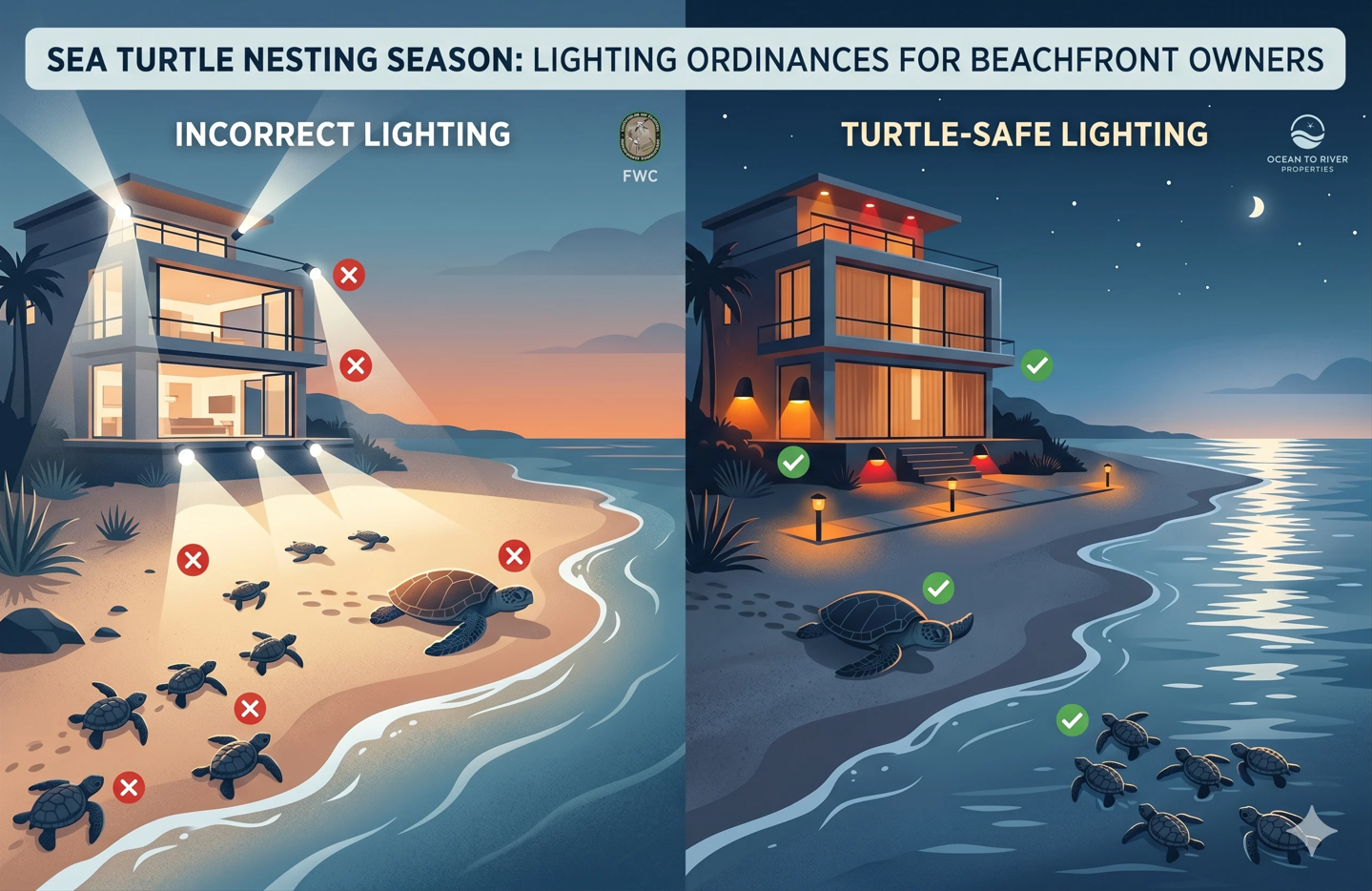
1. Keep it Low Fixtures should be mounted as low to the ground as possible to achieve their purpose (like illuminating a walkway). The lower the light, the less likely it is to be visible from the beach.
2. Keep it Shielded The bulb or light source should not be directly visible from the beach. Use opaque shields to direct the light downward, exactly where you need it for safety and navigation, preventing it from spilling out over the dunes.
3. Keep it Long (Wavelength) Sea turtles are less sensitive to long-wavelength light. Instead of standard white or blue-toned LEDs, all exterior beachfront lighting should utilize amber, orange, or red bulbs. These "bug lights" or specific turtle-safe LEDs provide enough light for human safety without drawing hatchlings off course.
Actionable Steps for Beachfront Owners
If you own a beachfront home, here is a quick checklist to ensure your property is ready for nesting season:
Conduct a Nighttime Audit: Go down to the beach at night and look back at your house. If you can see the source of the light (the glowing bulb itself), it is a violation and needs to be adjusted.
Draw the Blinds: Interior light bleeding through large ocean-facing windows is a common hazard. Simply drawing your curtains or pulling the blinds down after sunset makes a massive difference.
Apply Window Tint: If you prefer not to draw the blinds, consider applying a specialized window tint (usually a 45% or less visible light transmittance rating) to your ocean-facing windows.
Install Motion Sensors: For security lighting, use motion sensors so lights only turn on when absolutely necessary and turn off quickly once the area is clear.
Swap Your Bulbs: Replace any standard white bulbs in exterior fixtures with FWC-certified amber or red LED bulbs.
Protecting Our Coastal Heritage
At Ocean to River Properties, we believe that the natural beauty and wildlife of our coast are what make our community so valuable. Protecting our sea turtles isn't just about following the law; it is about preserving the magic of the coastal lifestyle for generations to come.
If you are looking to buy or sell a waterfront home, or if you have questions about making your new beachfront property eco-friendly, we are here to help. Our agents are local experts who understand both the real estate market and the unique nuances of coastal stewardship.
Contact Ocean to River Properties today to find your perfect piece of paradise—where you can live in harmony with nature!
Check out this article next