




In real estate economics, the link between civic infrastructure and local property values is a key area of market research. Investors, developers, and homeowners need to understand how better connectivity can lead to higher property values for long-term planning.
This review looks at how major local infrastructure projects, such as road expansions and bridge construction, have affected neighborhood property values over time. The analysis is based on historical data, market metrics, and economic studies.
The Mechanics of Infrastructure-Driven Appreciation
Economic research often points to "accessibility" as a key factor in property values. When cities invest in infrastructure, they change how people move around the area. The main reason for rising property values is easier travel, including shorter commutes, better logistics, and more traffic capacity.
Market data shows that properties within one to three miles of major infrastructure improvements often sell for more than the regional average. This increase comes from the improved usefulness of the land after the project connects to the local transit system.
Analyzing Road Expansions
Roadway expansions, particularly the widening of arterial corridors and the development of new highway interchanges, demonstrate a clear pattern of market influence.
- Commute Time Elasticity: Data shows that property values tend to rise when commute times to major job centers go down. Studies often find that after a road expansion cuts average commute times, local home values go up in the following months.
- Commercial Density Shifts: When roads are expanded, cities often rezone or allow more businesses along those routes. Data shows that nearby neighborhoods see higher property values because they are closer to new shops and businesses.
The Impact of Bridge Projects on Connectivity
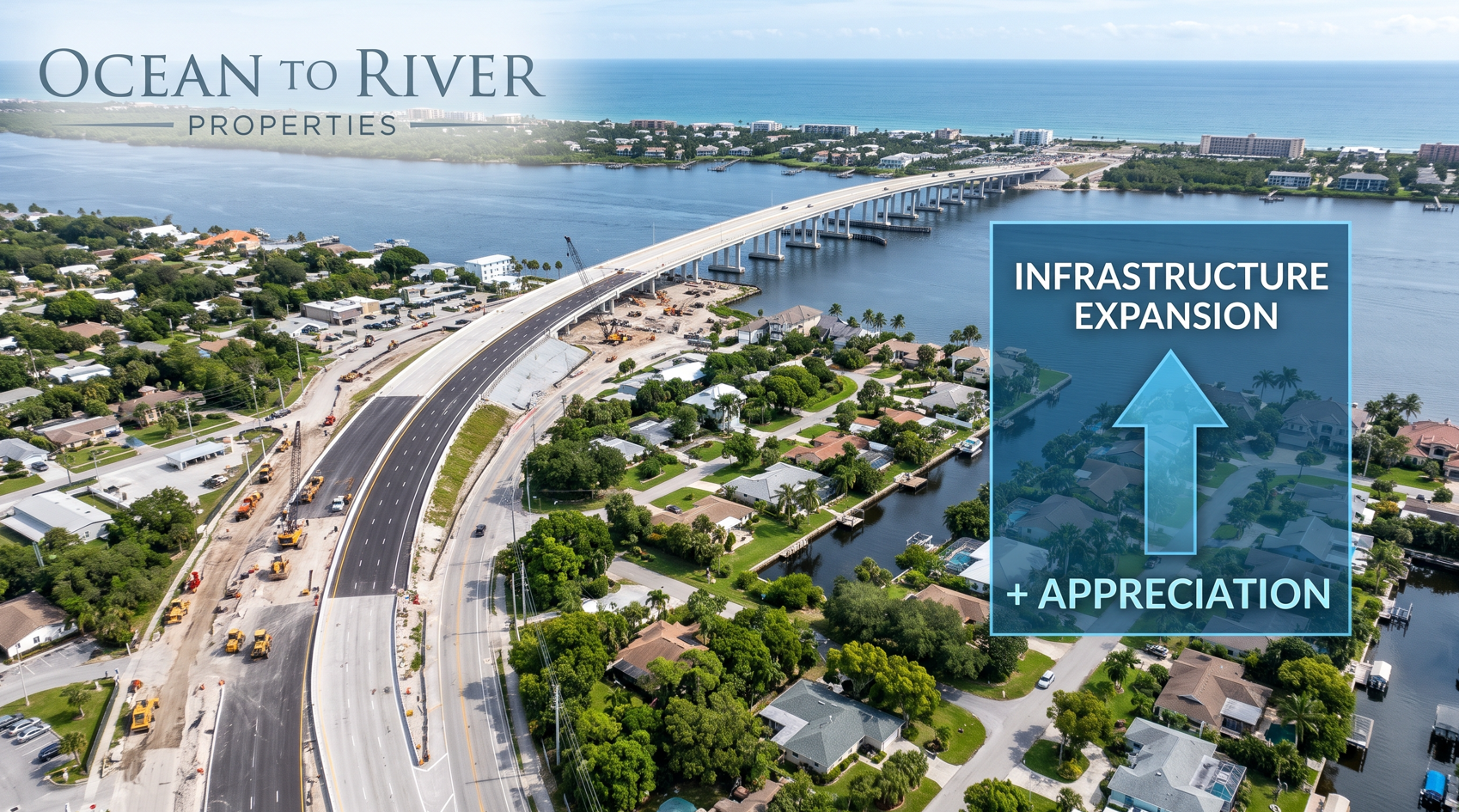
In coastal and riverfront areas, which are Ocean to River Properties’ main focus, bridges are the biggest driver of rising neighborhood values. Bridges remove geographic barriers and quickly connect outlying areas to valuable city centers.
- Market Equalization: Studies of completed bridges show a clear "catch-up" effect. Property values in once-isolated neighborhoods often rise quickly until the price gap between the two connected areas becomes much smaller.
- The Proximity Premium: Research finds that the biggest property value increases happen not right next to the bridge’s on-ramp, which can be noisy and busy, but in nearby neighborhoods that gain better access while staying quieter.
The Timeline of Appreciation: Announcement vs. Completion
Market data shows that property value increases from new infrastructure happen in two main phases, not all at once:
- The Announcement Effect: Real estate markets often react early. Studies show that property values can jump right after a project is officially funded and approved by the city. This first phase is usually driven by investors and large institutions.
- The Completion Effect: The rest of the property value increase usually happens in the year or two after the project opens. This second phase is led by homeowners and long-term investors who see the real benefits of shorter commutes and better access.
Historical data shows that bridges and road expansions are closely linked to higher local property values. By following city budgets, transportation plans, and construction schedules, real estate professionals can use real data to spot neighborhoods likely to see future value growth from new infrastructure.
Check out this article next