


As mortgage rates change and homeownership costs rise, more people in Florida are talking about foreclosures. Still, more foreclosure activity does not always mean the housing market is in trouble.
If you are thinking about buying or selling in Brevard County, comparing today’s foreclosure numbers to past years can help you understand how healthy the Space Coast housing market is.
Looking at local foreclosure filings, bank-owned sales, past market data, and national trends gives us a clearer picture of Brevard County’s situation in 2026.
Understanding Foreclosures and Distressed Properties
Before we look at the numbers, it helps to know the different types of distressed real estate.
- Pre-Foreclosure: A property where the owner has entered the foreclosure process but still retains ownership.
- Foreclosure: A legal process through which a lender seeks to recover an outstanding mortgage debt.
- Real Estate Owned (REO): A property acquired by a lender following foreclosure, commonly referred to as a bank-owned property.
- Short Sale: A transaction in which a lender agrees to accept less than the outstanding mortgage balance.
- Distressed Property: A broader classification that may include properties experiencing financial distress, significant physical deterioration, or other circumstances affecting their marketability.
A foreclosure filing does not always lead to a bank taking over the property. Homeowners might pay off their debt, work out a new loan, or sell the home before the process finishes.
Current Foreclosure Activity in Brevard County
The Space Coast Association of REALTORS® reports that in October 2026, foreclosures and bank-owned sales made up only a small part of the local real estate market.
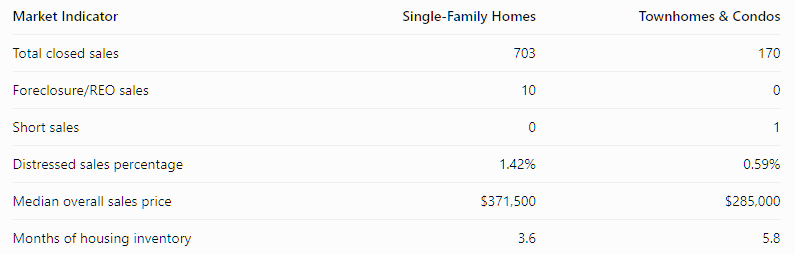
Source: Space Coast Association of REALTORS®, October 2026 Housing Statistics. Percentages calculated from reported transaction totals.
Out of 873 home sales, only 11 were foreclosures, REOs, or short sales. That’s about 1.26% of all residential sales.
Distressed properties still exist on the Space Coast, but most sales are still regular real estate transactions.
How Today’s Foreclosure Market Compares to Historical Levels
To see why today’s foreclosure numbers matter, it helps to look at Brevard County’s housing market after the 2008 financial crisis.
In February 2014, approximately 29.3% of all single-family home sales in Brevard County were classified as foreclosure or REO transactions. By February 2015, that percentage had declined to approximately 20.4%.
Today’s numbers tell a very different story.
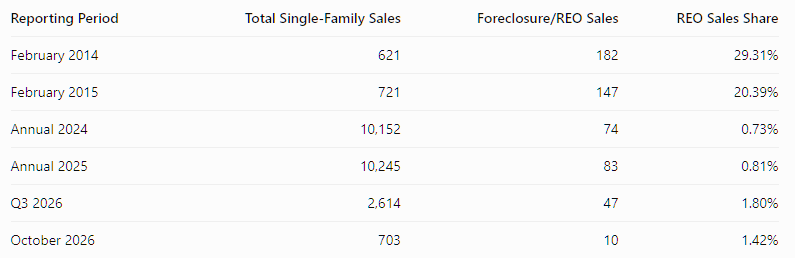
Sources: Florida Realtors historical market reports and the Space Coast Association of REALTORS®.
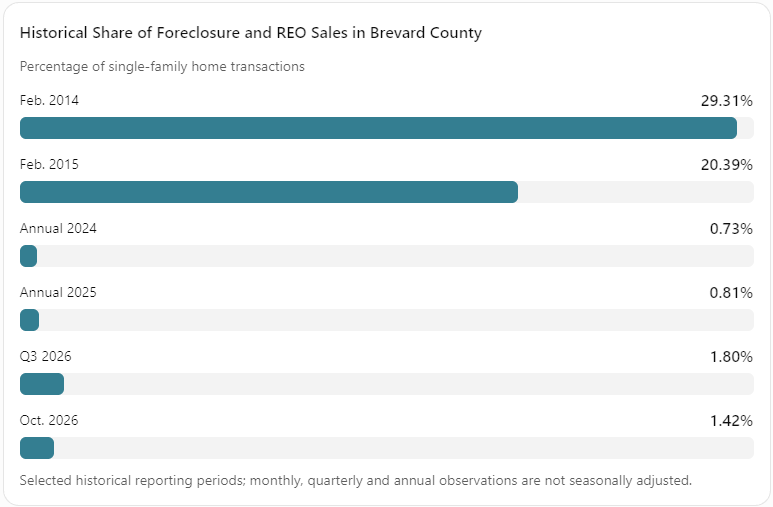
Even though these time periods are not the same length, the share of foreclosure sales shows how much the market has changed since the financial crisis.
In October 2026, about one out of every 70 single-family home sales was a foreclosure or REO. Back in February 2014, it was closer to one out of every three or four sales.
Brevard County Foreclosure Filing Trends: 2019–2025
Foreclosure filings are another way to measure financial stress for homeowners.
The University of Florida’s Shimberg Center for Housing Studies, using the Florida Housing Data Clearinghouse, tracks foreclosure filings in Brevard County over time.
Yearly Foreclosure Filings Filings per 1,000 Owner Households
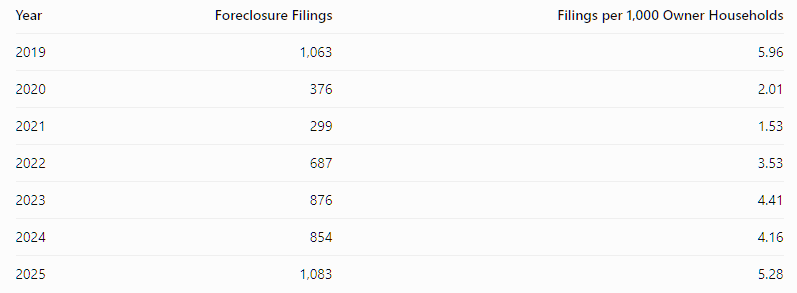
Source: University of Florida, Shimberg Center for Housing Studies.
Foreclosure filings went up by about 26.8% from 2024 to 2025. But compared to 2019, before the pandemic, the increase was only about 1.9%.
Also, when you account for the number of homeowners, Brevard County’s foreclosure rate in 2025 was about 11.4% lower than in 2019.
This difference matters in a growing area. More foreclosure filings do not always mean the overall rate of housing distress is rising as much.
National Bank-Owned Property Trends
National foreclosure numbers also help put Brevard County’s real estate market in context.
According to ATTOM’s 2025 Year-End U.S. Foreclosure Market Report, lenders repossessed 46,439 properties nationwide during 2025.
This was a 27% increase from 2024, but repossessions were still much lower than before the pandemic and far below the 2010 peak.
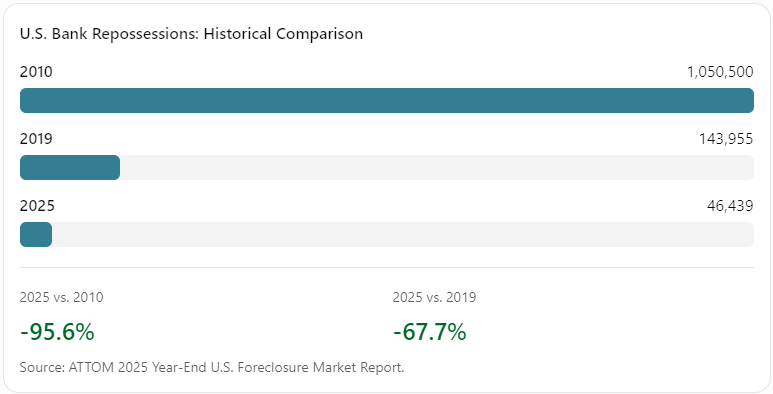
Source: ATTOM 2025 Year-End U.S. Foreclosure Market Report.
Across the country, foreclosure filings in 2025 hit 367,460 properties, which is about 87% less than the 2010 peak.
Foreclosure activity has gone up since the very low levels during and after the pandemic, but these numbers show that today’s national foreclosure situation is still very different from the last housing crisis.
Are Bank-Owned Properties Significantly Cheaper in Brevard County?
Foreclosure properties get a lot of attention because they might sell for less than regular homes.
In October 2026, Brevard County’s single-family foreclosure and REO properties recorded a median sales price of $243,250, compared with $374,500 for traditional transactions.
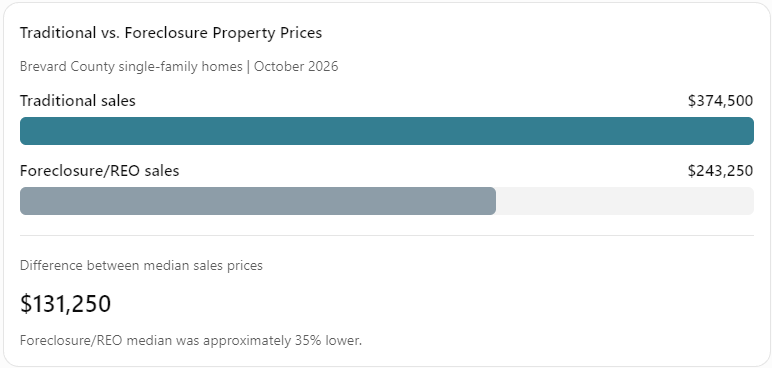
Foreclosure/REO median was approximately 35% lower.
But this price gap does not always mean you get a 35% discount on similar homes.
Distressed properties can be very different from regular listings in location, size, age, condition, needed repairs, insurance, and loan options.
Also, the October foreclosure median came from just 10 sales. With such a small number, prices can change a lot from month to month.
Buyers should look at each property on its own instead of thinking every bank-owned home is a great deal.
Factors That Could Influence Future Foreclosure Rates
Many economic and housing factors could affect foreclosure rates in Brevard County in 2027 and later.
Rising Homeowners Insurance Costs
Florida homeowners, especially in coastal areas, have special insurance issues. Higher premiums, roof rules, and flood insurance can all add to household costs.
Property Taxes and Overall Ownership Expenses
Mortgage payments are just one part of owning a home. Changes in taxes, insurance, maintenance, and association fees can all impact how affordable a home is over time.
Mortgage Interest Rates
When borrowing costs go up, it can make homes less affordable for buyers and make refinancing harder for owners who are struggling financially.
Homeowners with fixed-rate mortgages are usually better protected from rising interest rates, but their other costs can still go up.
Condominium Assessments and Association Fees
Condo owners might have extra costs for building upkeep, reserve funds, repairs, and special fees.
These costs are especially important to consider in older condo communities in places like Cocoa Beach, Cape Canaveral, Satellite Beach, Indian Harbour Beach, and other coastal towns.
Homeowner Equity
Homeowner equity can be a helpful financial cushion. If owners have enough equity, they might be able to sell their homes the usual way instead of facing foreclosure.
That’s why it’s important to watch both home values and foreclosure filings when looking at the market.
Could Brevard County Experience a Foreclosure-Driven Housing Market Correction?
Current statistics do not show a foreclosure-driven housing crisis like what happened after 2008.
Still, some indicators have gone up and should be watched closely.
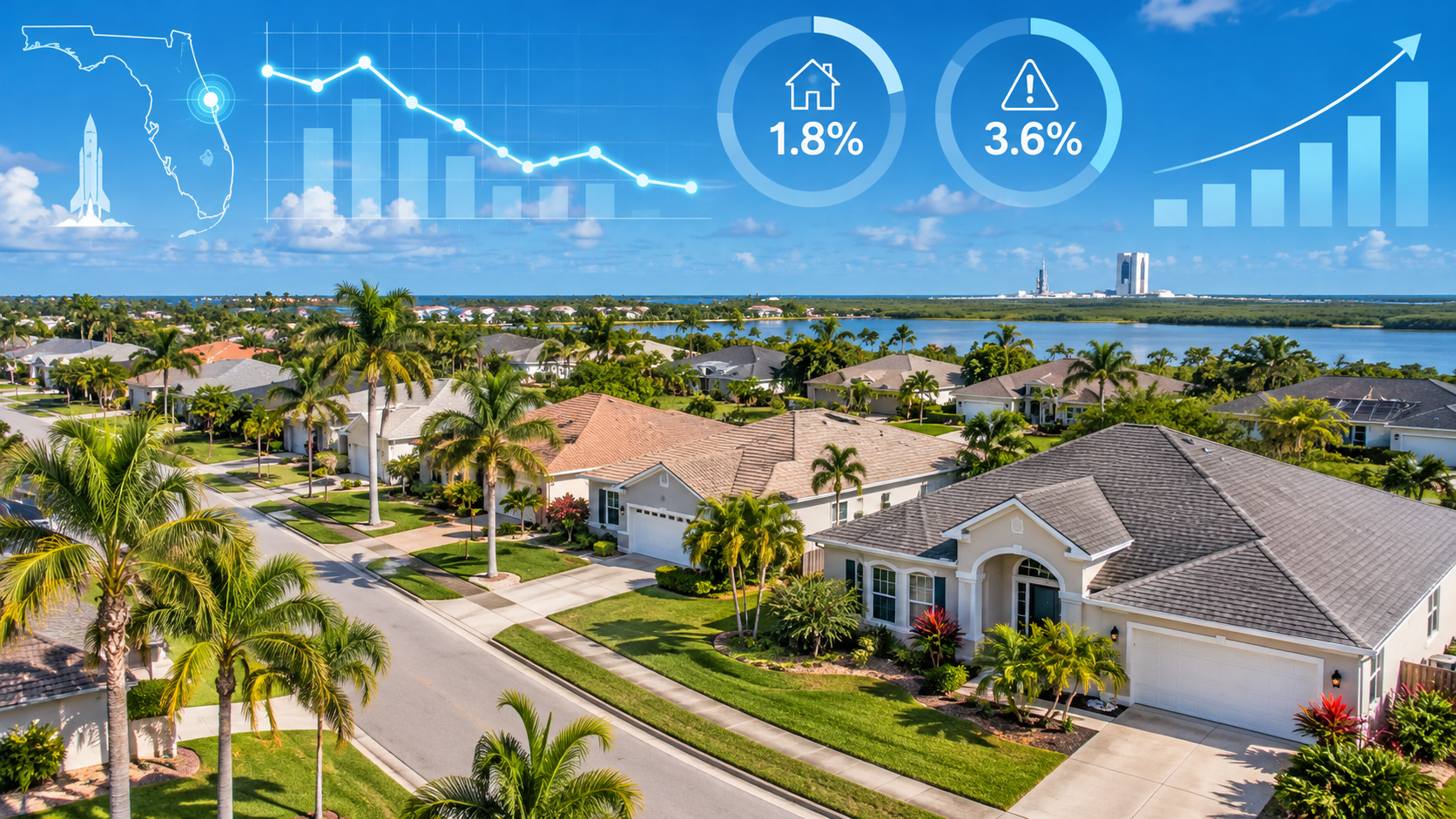
In the third quarter of 2026, Brevard County had 47 single-family foreclosure or REO sales, up from 16 in the same period in 2025. This is about a 194% increase.
Even with this big percentage jump, foreclosure and REO sales made up only about 1.8% of single-family sales for the quarter.
This shows why it’s important to look at both percentage changes and the actual number of transactions.
A large percentage increase from a small starting number can make headlines, but it doesn’t always mean the market is unstable.
To see if distressed properties are starting to push local housing prices down, it’s important to watch several indicators together:
- Active bank-owned property inventory
- Foreclosure filings and completed repossessions
- Distressed properties as a percentage of total home sales
- Mortgage delinquency rates
- Months of available housing inventory
- Median sales price trends
- Homeowner equity levels
- Average marketing times and price reductions
If several indicators keep rising, that would be a stronger sign of market trouble than just a single jump in foreclosure filings.
What This Means for Brevard County Homebuyers
If you’re looking to buy a home, foreclosure and bank-owned properties might let you buy for less than the median price of regular sales.
But buyers should look closely at all the costs, like repairs, renovations, insurance, financing rules, unpaid assessments, and any title issues.
No matter if you want a single-family home in Melbourne, a condo in Cocoa Beach, an investment in Palm Bay, or a waterfront place on Merritt Island, a local real estate expert can help you decide if a distressed property is a good deal.
The goal is to buy the right property at a fair price, whether it’s bank-owned or listed the usual way.
What This Means for Brevard County Homeowners and Sellers
If you’re thinking about selling, foreclosure stats can help you understand the market, but they shouldn’t be the only thing guiding your pricing decisions.
Since most local home sales are still traditional, details about your property are still key to figuring out its value.
Things like location, condition, recent sales nearby, neighborhood inventory, upgrades, and buyer demand usually give you better pricing info than countywide foreclosure news.
If you’re having financial trouble, it’s best to look at your options early. Reach out to your mortgage servicer, talk to a HUD-approved housing counselor, and get a clear idea of your home’s value to understand your choices before foreclosure moves forward.
The Bottom Line: Increased Activity Does Not Necessarily Mean a Housing Crisis
Foreclosure activity in Brevard County has gone up compared to the very low levels of recent years. Still, distressed property sales are only a small part of the overall real estate market.
Here are the main findings from this review:
- Foreclosure and REO sales represented just 1.42% of Brevard County single-family home transactions in October 2026.
- The county’s foreclosure filing rate per 1,000 owner households remained below its 2019 pre-pandemic baseline in 2025.
- National bank repossessions in 2025 remained approximately 96% below their 2010 peak.
- Foreclosure properties recorded lower median sales prices than traditional properties, although differences in property characteristics must be considered.
- Historical local foreclosure sales shares remain substantially higher than those recorded today.
The data suggests we should keep watching foreclosure activity instead of jumping to conclusions about where the Space Coast housing market is headed.
Methodology note: This analysis separates foreclosure filings, completed bank repossessions, and closed distressed-property sales. Since public reports didn’t have a verified history of active bank-owned listings, we used closed distressed-property sales to measure market participation instead of counting them as active inventory.
Navigate the Brevard County Real Estate Market with Ocean to River Properties
At Ocean to River Properties, we believe good real estate decisions start with solid market data, local know-how, and a clear understanding of each property’s value.
Our team helps buyers and sellers all over Brevard County, including Cocoa Beach, Cape Canaveral, Melbourne, Melbourne Beach, Satellite Beach, Indian Harbour Beach, Merritt Island, Rockledge, Viera, Palm Bay, and nearby Space Coast communities.
If you want to buy a foreclosure, look at an investment, sell your home, or just learn how the market affects your property’s value, our experienced real estate team is here to help.
Reach out to Ocean to River Properties today for personal guidance, local market insights, and a clearer view of your real estate options on Florida’s Space Coast.
Sources and References
- Space Coast Association of REALTORS® — October 2026 Brevard County Housing Statistics
- Space Coast Association of REALTORS® — September and Q3 2026 Housing Statistics
- Space Coast Association of REALTORS® — Annual 2025 Brevard County Housing Statistics
- Florida Realtors® — Brevard County Historical Market Detail, February 2015
- University of Florida — Shimberg Center for Housing Studies, Florida Housing Data Clearinghouse
- ATTOM — 2025 Year-End U.S. Foreclosure Market Report
Check out this article next